











Netflix Stock Analysis: Why Walking Away from an $82 Billion Deal Was a Genius Move
 Analyze Nvidia Like a Pro – Free 30-Page Report Inside
Netflix just walked away from an eighty-two-billion-dollar deal, and the market responded by sending its stock exploding thirteen percent higher. Did they just lose the asset of a lifetime, or did they execute one of the smartest traps in Wall Street history? For anyone conducting a Netflix stock analysis, this event serves as a pivotal moment that redefines how we view growth in the digital age. This article will provide you with a deep understanding of why the market cheered a failed acquisition, how value investing principles apply to high-tech streaming, and what this means for your personal investment portfolio. We will explore the financial mechanics behind the decision, the regulatory landscape, and the future of the streaming wars to give you a comprehensive perspective on this market-moving event.
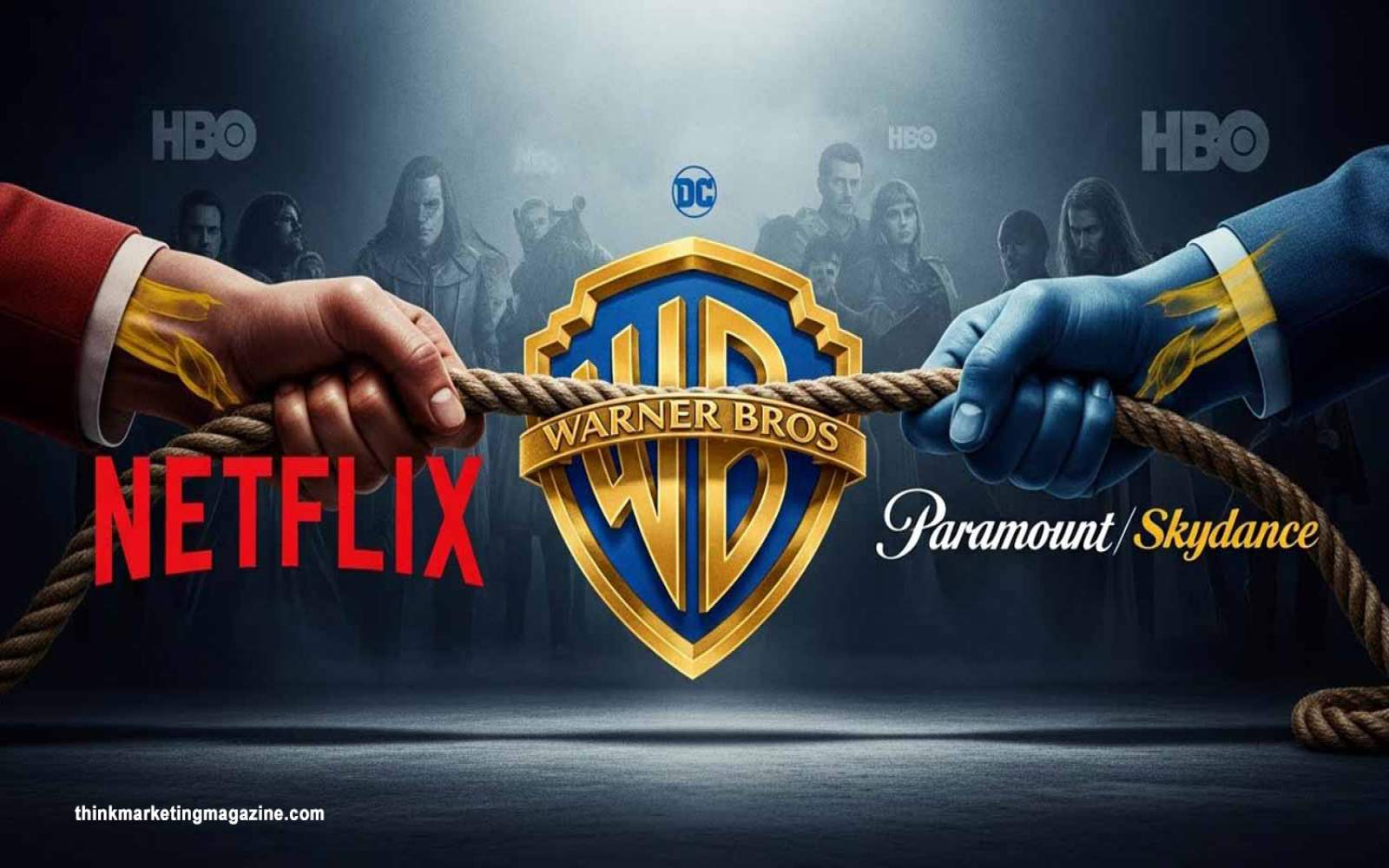 Photo: pexels.com
📌 Key Highlights
- The Discipline Paradox and Value Investing in the Streaming Era
- Capital Allocation: Why Share Repurchases Outshine M&A
- Building the Content Fortress: Why Netflix’s $20 Billion Spend is a Game Changer
- Navigating the Regulatory Minefield and Netflix Stock Analysis
- The Poison Chalice and the Future of the Streaming Landscape
The stock didn't just tick up; it rocketed nine percent in pre-market trading to over ninety-two dollars a share immediately after the announcement. Now, usually in stock market analysis, when a company fails to acquire a historic asset like Warner Bros. Discovery, you expect the price to drop because they missed a growth opportunity. But here, we are seeing the exact opposite. The market is cheering because Netflix just proved that sometimes, the most powerful move you can make is to do absolutely nothing. This counterintuitive reaction highlights a shift in investor sentiment from "growth at all costs" to a focus on sustainable profitability and capital discipline.
To understand this, we have to look at the numbers that killed this deal. The offer Netflix refused to match was Paramount Skydance’s bid of one hundred and eleven billion dollars. That is roughly thirty-one dollars a share for the target company. Netflix, however, drew a hard line in the sand at eighty-two-point-seven billion. This massive gap in valuation wasn't an accident or a lack of funds; it was a calculated stance on what the assets were actually worth in the current macroeconomic environment. As an investor, understanding why a company says "no" is often more important than understanding why they say "yes."
The Discipline Paradox and Value Investing in the Streaming Era
At first glance, it looks like Netflix simply got outbid. They were the smaller wallet in the room, or so it seemed. But when we look deeper, we see a massive twenty-eight-billion-dollar valuation spread. This brings us to our first major lesson in value investing: The Discipline Paradox. In a bidding war, the winner is often the one who loses the most value by overpaying. By refusing to chase the price higher, Netflix management demonstrated a commitment to shareholder value that is rare in the high-stakes world of media and entertainment.
This level of discipline is a core component of our ongoing Netflix stock analysis and should be a primary metric for any retail investor. Think of it like buying a house in a bidding war. If the house is worth five hundred thousand, and your neighbor bids seven hundred thousand just to win, did you lose? No. You avoided overpaying for an asset that would have wrecked your bank account and left you underwater on your mortgage.
This gap represents the premium Paramount was willing to pay for "synergies"—which is just fancy corporate speak for cost-cutting and scale. In the world of finance, synergies are often promised but rarely realized to the degree predicted in initial reports. By walking away, Netflix management stated that the "price of friction"—the debt, the integration headaches, and that massive premium—was higher than the actual value of the Warner Bros. assets. For you as an investor, this is a critical piece of fundamental analysis.
The best trades are often the ones you do not make. In a market obsessed with growth, a management team that refuses to overpay is a management team that respects your capital. They proved they aren't empire-building for ego; they are operating based on cold, hard financial models. This behavior builds long-term trust and lowers the risk profile of the stock, which is exactly why we saw the price surge rather than slump. Understanding this concept is crucial, and we dedicate a lot of attention to it on the blog as we analyze various market sectors.
- Avoiding the "Winner's Curse": Netflix avoided the pitfall of paying more for an asset than its future cash flows could justify.
- Preserving Cash for Better Uses: By not spending $82 billion on a legacy merger, they kept their balance sheet flexible for high-ROI internal projects.
- Signaling Rationality to the Market: Investors reward sanity, especially in an industry known for over-extending on debt-funded acquisitions.
Capital Allocation: Why Share Repurchases Outshine M&A
But this raises a difficult question. If they aren't spending eighty-two billion dollars on a major acquisition, what happens to that cash? Is the growth story over? This leads us to a crucial pivot in their investing strategy: The Capital Allocation Shift. Almost immediately after declining the bid, Netflix confirmed they would resume their share repurchase program. This is a massive signal to the investment community.
Instead of buying Warner Bros. Discovery, Netflix is choosing to buy Netflix. This shift is a central pillar of our Netflix stock analysis moving forward. Now, many novice investors dismiss buybacks as just financial engineering or a way to artificially inflate earnings per share. But I want you to see this differently. The company had a "war chest" ready for a merger. By redirecting that into buybacks, they are setting a floor for the stock price and returning value directly to you, the shareholder.
When a company buys back its own shares, it reduces the total number of shares outstanding, meaning your piece of the pie becomes larger and more valuable without you having to spend an extra cent. This is a topic we expand on in our other guides regarding shareholder yield and long-term wealth creation. They are telling you, the shareholder, "We believe our own stock is a better investment than Warner Bros. Discovery at a one-hundred-and-eleven-billion-dollar valuation." This creates a pristine balance sheet, contrasting sharply with the debt-heavy profile a combined Netflix-Warner entity would have carried.
In an era of higher interest rates, debt is expensive. A company with low debt and high free cash flow is a fortress. Netflix is choosing to be that fortress rather than a sprawling, messy empire struggling to pay off its acquisition loans. For the retail investor, this represents a significantly lower risk profile. This strategy demonstrates that the company is a compounding machine, not a reckless spender.
- Free Cash Flow Generation: Netflix generates massive amounts of cash from its global subscriber base.
- Execution of Buybacks: They use the "war chest" to retire shares, increasing the equity value for remaining holders.
- Signaling Value: Management looks at their own stock price and determines it is undervalued relative to the ROI of a merger.
Building the Content Fortress: Why Netflix’s $20 Billion Spend is a Game Changer
However, you might be asking: Can they actually compete without owning the Harry Potter or DC franchises? Can they survive without that massive legacy library? To answer that, we have to look at a staggering number: twenty billion dollars. That is the amount Netflix committed to investing in organic content—films and series—just this year. We call this the "Content Fortress" strategy, and it is the second most important factor in this Netflix stock analysis.
The common narrative in stock market analysis is that you need to buy legacy studios to get quality content. The theory is that old IP (Intellectual Property) is a safer bet. But when a company spends twenty billion dollars annually on production, they are effectively building a new Warner Bros. inside their own walls, every single year. The difference is that they own it all from the ground up, without the baggage of legacy contracts, outdated union agreements, or fading cable networks. They are creating the IP of the future rather than overpaying for the IP of the past.
The twist here is control. When you acquire a studio, you acquire their bad contracts, their declining cable networks, and their physical overhead. You are buying a lot of "waste" just to get to the gems. When you spend twenty billion dollars organically, every dollar goes exactly where you want it. You can pivot to gaming, live sports, or international dramas instantly. This organic growth is funded by free cash flow—the cash left over after paying the bills—which is infinitely less risky than growth funded by debt.
Netflix is choosing to be a compounding machine rather than a debt-laden conglomerate. This "Build vs. Buy" decision is a classic corporate strategy dilemma. In the current interest rate environment, building is almost always superior if you have the cash. By building their own library, Netflix avoids the amortization and depreciation nightmares associated with big-ticket acquisitions. They are not just a streaming service; they are a vertically integrated media tech giant.
This allows them to maintain a high operating margin, which is the envy of the industry. While Disney and Paramount struggle with their linear TV businesses, Netflix is pure-play digital, and that simplicity is a major driver of its high valuation. By focusing 100% on their core digital product, they avoid the pitfalls of legacy media models. This internal production cycle creates a sustainable loop of growth and high returns.
- Content Spend: Netflix is investing twenty billion dollars in organic content creation this year alone.
- Build vs. Buy: In the current interest rate environment, building internal libraries is superior to expensive acquisitions.
- Operating Margins: Netflix maintains industry-leading margins by being a pure-play digital entity without legacy overhead.
Navigating the Regulatory Minefield and Netflix Stock Analysis
But to fully grasp this strength, we need to look at something else for a moment—something seemingly unrelated. We need to look at Washington D.C. This situation leads us directly to the next, even bigger question. Was this deal ever actually real, or was it a trap set by Netflix to force its competitors into a corner? This is a sophisticated angle that many surface-level analysts miss, but it is vital for a true Netflix stock analysis.
Warner Bros. Discovery’s board explicitly stated that the Paramount deal offered a "truly viable path to government approvals." That is a polite way of saying a Netflix merger would have been a regulatory nightmare. We know that Co-CEO Ted Sarandos made a trip to Washington recently. It is highly likely he saw the writing on the wall. In the current antitrust climate, regulators are extremely wary of "Big Tech" companies buying up major media assets.
If Netflix had pursued the deal, they would have faced years of legal battles, discovery requests, and potentially a forced divestiture of assets. By stepping aside, Netflix avoided years of antitrust litigation and millions in legal fees. This transforms the "failed bid" into a skillful evasion of a political trap. While Paramount and Warner Bros. spend the next eighteen months slogging through lawyers, integration committees, and regulatory hearings, Netflix remains agile.
They can focus entirely on their product, their user experience, and their global expansion. In the fast-moving world of technology, eighteen months of distraction can be a death sentence. Netflix chose to stay in the race while its competitors are heading to the courtroom. And this brings us to how the management framed this loss. It is a masterclass in narrative control.
In their statement, Sarandos and Peters referred to the transaction as a "nice to have," not a "must-have." Think about the power of that phrase. By categorizing the acquisition of one of Hollywood’s most historic studios as merely "nice to have," they stripped Warner Bros. of its "kingmaker" status. They are signaling that Netflix is the sun around which the media universe orbits, and everything else is just planetary debris.
This eliminates the fear that Netflix is desperate for content. A desperate company overpays. A confident company calls a bluff and walks away. This posture reinforces their position of power in the industry landscape. By refusing to show weakness, they have forced their competitors into defensive and expensive consolidation efforts.
- Regulatory nightmare: A Netflix merger would have faced years of legal battles and potentially forced divestiture.
- Nice to have, not a must-have: Management stripped Warner Bros. of its "kingmaker" status with this phrasing.
- Agility: While competitors deal with lawyers, Netflix remains focused on product and global expansion.
The Poison Chalice and the Future of the Streaming Landscape
But there is one final, ruthless angle to this fundamental analysis that we cannot ignore. It’s the concept of the "Poison Chalice." By forcing Paramount Skydance to pay one hundred and eleven billion dollars to win, has Netflix effectively crippled its competitor? This is the ultimate "chess move" in our Netflix stock analysis. Paramount is now the "winner" of the auction, but they have won a massive debt load and the complex task of merging two distinct corporate cultures during a period of economic uncertainty.
Paramount and Warner Bros. now have to deal with the declining cable assets that come with these legacy companies. They have to manage the transition of audiences from linear TV to streaming while paying down the billions they borrowed to make this merger happen. Meanwhile, the stock market reaction suggests that investors view pure-play streaming economics as superior to these hybrid legacy models.
Netflix is being valued like a tech company—efficient, scalable, and high-margin. The new Paramount-Warner entity is being valued like a utility—heavy infrastructure, slow growth, and high debt servicing costs. We are seeing a clear divergence in the market. This is pure value investing: betting on the model that compounds cash, not the model that compounds complexity.
As an investor, you want to own the company that other companies are forced to serve. That is where the real power lies. In the coming years, the burden of debt will likely force the new conglomerate to seek out revenue from any source possible. This brings us to a major prediction: the content will eventually come to Netflix anyway. This strategic patience allows Netflix to maintain its dominant market position without the associated risks of a merger.
- Poison Chalice: The winner of the auction now faces a massive debt load and complex corporate integration.
- Valuation gap: Netflix is valued as a high-margin tech company, while the new entity is treated like a utility.
- Content licensing: Predicting that the debt-burdened conglomerate will eventually license its top IP to Netflix to generate cash.
Conclusion
So, let’s circle back to where we started. The headline says Netflix "lost" the bid. The main assumption is that Paramount won because they were willing to pay the price of friction—the twenty-eight-billion-dollar premium and the regulatory headache. But the chart tells the real story. Netflix is currently stronger than it was before the bid. Its greatest strength is its capital discipline—the ability to say "no" when the price isn't right.
Its potential Achilles' heel remains the lack of a deep, century-old IP library, but they are mitigating that with their massive twenty-billion-dollar annual spend on fresh, global content. They have preserved their balance sheet, they are buying back their own stock, and they have left their rivals to fight over the scraps of the old media world. That is why I believe that within the next three years, we will see a major twist in this investing strategy saga.
The new Paramount-Warner entity, struggling under the weight of debt and the need to show quarterly profit to satisfy lenders, will be forced to license their most prestigious content—Harry Potter, DC, and HBO archives—directly to Netflix to generate quick cash. Netflix won’t need to buy the company; they will simply rent the best parts of it. This proves once and for all that in the streaming wars, you don't need to own the studio to own the audience. This Netflix stock analysis concludes that the company is in a position of unprecedented strength by choosing the path of discipline over the path of reckless expansion.
In the end, the market doesn't reward the biggest company; it rewards the smartest one. Keep a close eye on their free cash flow metrics and buyback execution—they are the real indicators of future performance. Netflix has proven that a focus on sustainable profitability and capital allocation is the winning formula in the digital age. By walking away from a bad deal, they have moved closer to securing their long-term dominance in the entertainment industry.
Analyze Nvidia Like a Pro – Free 30-Page Report Inside
Our mission is to provide credible, practical knowledge that helps you make better financial decisions. Each post on this blog is another building block towards your success. We encourage you to read on – the best investment you can make is in your own knowledge.
Disclaimer
This article is provided for informational and educational purposes only and does not constitute investment, financial, or trading advice. The content reflects the author’s opinions and analysis based on publicly available information and does not take into account your individual financial situation, objectives, or risk tolerance. MarketVectors.Pro and its affiliates do not make any representation or warranty as to the accuracy, completeness, or timeliness of the information presented and shall not be held liable for any investment decisions, losses, or damages resulting from the use of this content. Always conduct your own research and consider consulting a qualified financial professional before making any investment decisions. For more details, please review our full disclaimer.
 Did you find this article useful and informative? If it helped you better understand the topic, consider leaving a comment and sharing it with others who might benefit from it. The author is not a licensed financial advisor, and the content is intended for educational purposes only. You can learn more about our mission and team on our about us page. – The MVPro Team










Comments